
The Elder Tree

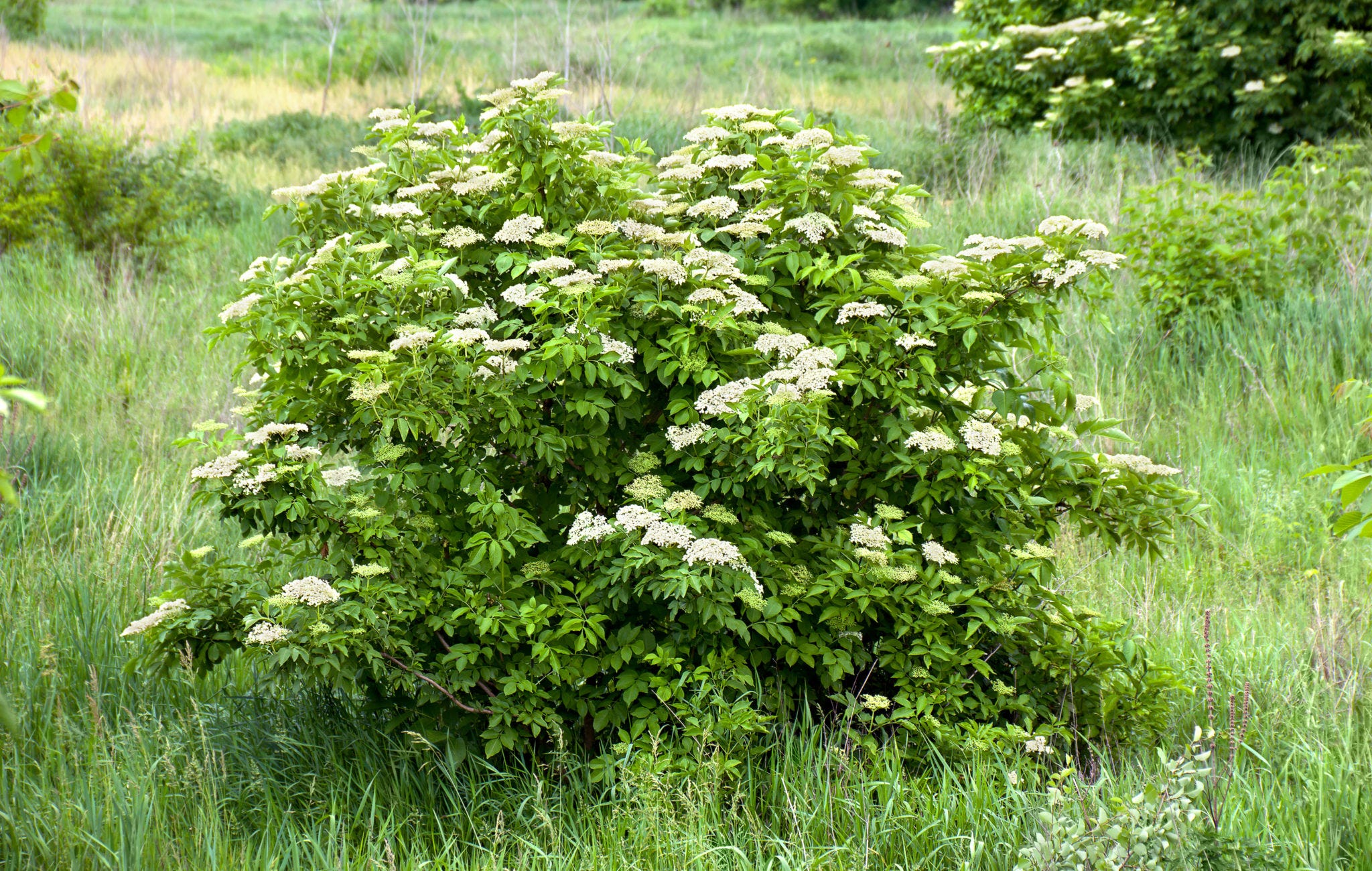
When I was a young boy, I would often walk home from my school over a railway footbridge. Either side of it is a patch of grass with some hedges and a concrete path leading to and from the bridge. On the end furthest from my parents house, the grass area contained a variety of tall trees. One of these was an Elder. At the time I didn’t pay much attention to it and I had little idea what kind of tree it was. It was just there. Then one day the council cut it down. At the time I simply thought that was a shame. It had seemed a nice tree. The Elder quickly produced new shoots and began to grow in a giant bush like shape out of the stump. I grew to like that tree.
Time passed. I was now at secondary school and a teenager. I noticed how the tree took on the appearance of a giant football. Not only had it refused to give in when it was cut down, but it had become its own thing - not quite a tree, but certainly no shrub. Whenever I felt life was hard the tree reminded me that it is possible to fight back and to thrive again. That tree had no small part to play in getting me through my school exams, not alone the other troubles that fill a teenage boys mind.
In time I learnt that it was an Elder; that it produced flowers in the summer that could be turned into a cordial and berries in the autumn that made a great jam or, even better, a rich dark red wine. I never borrowed from that tree itself, but I have many times borrowed from its cousins. Instead, I simply admired its tenacity and enjoyed its presence whenever I returned to the family homestead.
This February I returned to my parents home and walked that path only to find the tree gone. The council had torn it down again, but this time they didn’t even leave a stump. There is nothing left.
I was devastated!
They will, undoubtedly use an excuse as to why it had to be pulled down, but ultimately someone probably just took a disliking to it as it grew differently than the other trees. I knelt down towards the muddy, wood chipped ground and placed a hand on what little of it was left. I told it I was sorry; that I would miss it; and that I was sad at what had been done to it (again!). A piece of my connection to my homeland; my roots, had been lost. It might rise again - phoenix like out of the ashes of its old self, but this time, the damage looked more fatal. I can hope. Ultimately though, all I can do is remember the tree and keep it in my memory. Time passes. Things change. Loss happens. It is a part of life but one that should never be taken lightly.
A few years ago there was national outcry when the 120 year old Sycamore Gap tree near Hadrian’s Wall was illegally chainsawed down. The tree had appeared in the 1991 movie Robin Hood: Prince of Thieves. Another outcry occurred when a ancient oak tree was illegally removed in the land of a Toby Carvery restaurant in north London. It had been over 500 years old and was completely healthy. Between 2014 and 2018, a whole city rose up in anger at their council. The council had gotten itself into an extremely bad contract which resulted in a company destroyed thousands of trees on the streets of Sheffield. The contract had indicated a target of 17,500 trees to be cut down, diseased or healthy didn’t seem to matter. This disastrous decision transformed the city from the green tree-lined city I had known during my PhD studies, into a concrete-only space – all because the company got money for every tree it fell, no matter if it needed to go or not. The company did replace these trees with saplings, but the need or reason for felling the original trees seemed to be a mute point to them.
Sometimes we get angry about the removal of trees, especially when they come to represent something that we care about. Most trees, though, are outside of our notice. They are there; sentinels of nature; mostly ignored; missed by almost no one when they are gone. When we do notice, however the love for trees becomes obvious.
With a lot of nurture and support, the Sycamore Gap tree has sprouted new saplings. In Sheffield, after a long-running campaign (which involved arrests) the citizens of the city were able to bring the council and the company it was working with, into discussion. The result was a pledge to deliver a Tree Partnership Strategy which would not only provide a more sensible tree management approach but one which valued the trees themselves. In May 2022, giving a further boost to that approach, Sheffield was named a Tree City of the World by the UN, in recognition of its renewed work to substantially manage and maintain urban forests and trees.
In a world falling further and further into ecological decline and climate crisis, trees are becoming more important than ever. They help hold carbon within themselves, which helps with the climate problem, but much more than that they equal habitats for life, they provide beauty, they help to improve the soils. Some even offer us food.
I feel this essay needs an ending that speaks more beautifully about trees than I ever can achieve. For that job, I turn to naturalist writer, Robert Macfarlane. In 2019, he published Underland. In that work he wrote about trees and the nature of them, especially the discovery that they work with fungi to spread nutrients and water and even to communicate with each other. In this passage, Macfarlane talks about his instincts not to treat trees as if they were human – i.e. seeing in them human characteristics – while seeing and feeling the depth of their beauty and interconnectedness. Trees are cooperative plants and as such, we would do better if we listened to them, or at least, spent a bit more time in their presence. I’ll leave you in his capable hands.
Until next time,
Matt
“We stop and lie down for a while on the woodland floor, on our backs, not speaking, watching the trees’ gentle movements in the breeze, and the light lacing and lancing from fifty feet or more above us. Where the pollards spread out to form the canopies, I realize I can trace patterns of space running along the edges of each tree’s canopy: the beautiful phenomenon known as ‘crown shyness’, whereby individual forest trees respect each other’s space, leaving slender running gaps between the end of one tree’s outermost leaves and the start of another’s.
Lying there among the trees, despite a learned wariness towards anthropomorphism, I find it hard not to imagine these arboreal relations in terms of tenderness, generosity and even love: the respectful distance of their shy crowns, the kissing branches that have pleached with one another, the unseen connections forged by root and hyphae between seemingly distant trees.”
Robert Macfarlane, Underland (2019), pp. 99-100.
This article is free for all readers. If you would like to support our work with a one-off contribution, click the “Buy me a Coffee” button below.
If you would like to support Side Stepping Normal with a monthly or annual subscription, and receive more of our writing about finding a good life in a time of climate change and ecological decline, click the “Subscribe now” button below for options.